Selective Beta Blockers
Drug Comparisons Beta Blockers - Comparative properties and equivalent dosages of various beta blocker medications and protocols for clinical professionals. Findings showed achievement of HVPG hepatic venous pressure gradient-response to non-selective beta-blocker NSBB therapy in 553 of NASH patients with varices and this appeared to protect from variceal bleeding.

Cardioselective Beta Blockers B1 Mnemonic Manbabe M Grepmed

Baseline Characteristics And Type Of Beta Blockers Prescribed In The Download Table
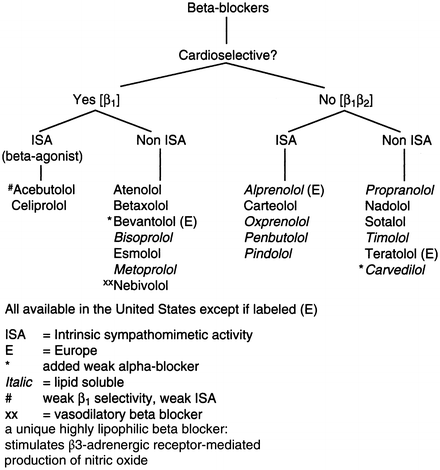
Beta Blockers Thoracic Key
Beta-blockers that are used clinically can be divided into two classes.

Selective beta blockers. Selective beta-blockers mostly target the heart while non-selective ones manage symptoms in other parts of the body. In an analysis of 10 studies on the effect of beta-blockers in patients with asthma where selective beta-blockers were administered for up to 14 weeks there was no change compared with placebo in FEV1 symptoms or inhaler use. 2 3 4 Beta-blockers lower the secretion of melatonin and hence may cause insomnia and sleep changes in some patients.
Beta blockers should now be considered standard therapy in patients with New York Heart Association class II or. Beta blockers must not be used in the treatment of selective alpha-adrenergic agonist overdose. Some beta blockers for example pindolol Visken have intrinsic sympathomimetic activity ISA which means they mimic the effects of epinephrine and norepinephrine and can cause an increase in blood pressure and heart rate.
1 non-selective blockers block both β 1 and β 2 receptors or 2 relatively selective β 1 blockers cardioselective beta-blockers. That means they block both beta1 and beta2 receptors and so affect the heart lungs vascular smooth muscles kidneys GI etc. Selective beta blockers Atenolol Esmolol Metorprolol block only beta 1 which are found in the heart and kidneys.
Here are some common. FDA approved uses of beta-1-selective blockers include hypertension chronic stable angina heart failure post-myocardial infarction and decreased left ventricular function after a recent myocardial infarction. Metoprolol and bisoprolol are both cardio selective beta blockers acting primarily on beta-1 receptors.
An unfavourable metabolic profile of beta-blockers was reported based on studies describing the metabolic side effects of weakly-selective or non-selective agents. Beta-blockers can also be selective or non-selective. Beta blockers are a group of drugs that inhibit the sympathetic activation of β-adrenergic receptors.
Cardioselective blockers eg atenolol bisoprolol primarily block β1 receptors in the hea. Nebivolol is a novel beta-blocker with both a greater degree of selectivity for beta-1 adrenergic receptors than other agents in this class and an ability to stimulate endothelial nitric oxide production leading to vasodilation and other potential clinical effects. In systolic heart failure three agents proved to improve survival up to 30 mainly because of B1-blocking.
Because of how common anxiety disorders and high blood pressure have become in todays society many people have turned to natural beta blockers as an alternative to heavy pharmaceutical use. Uses According to a 2021 study beta-blockers are common in. Beta-1 receptor-selective blockers like atenolol bisoprolol metoprolol and esmolol only bind to the beta-1 receptors.
By comparison carvedilol is a non-selective beta blocker with additional alpha-receptor blocking and antioxidant properties. Alpha-1 adrenergic receptors are present in vascular smooth muscle the central nervous. First generation beta blockers such as propranolol Inderal InnoPran nadolol timolol maleate penbutolol sulfate sotalol hydrochloride and pindolol are non-selective in nature meaning that they block both beta 1 β 1 and beta 2 β 2 receptors and will subsequently affect the heart kidneys lungs gastrointestinal.
Cardioselective beta blockers have a clinical advantage in that they are 20 times more potent at blocking beta-1 receptors than beta-2 receptors. Therefore they are cardio-selective. Alpha-1 blockers also called alpha-adrenergic blocking agents or alpha-1 antagonists constitute a variety of drugs that block the effect of catecholamines on alpha-1-adrenergic receptorsThey are mainly used to treat benign prostatic hyperplasia BPH hypertension and post-traumatic stress disorder.
Beta blockers can also be developed to be selective in the types of beta they target or they can be non-selective which means they would affect both beta 1 and beta 2. However non-cardioselective beta blockers can cause significant bronchial constriction and could be harmful especially in patients with respiratory conditions such as asthma or chronic obstructive pulmonary disease. Carvedilol is a non-selective beta-blocker with additional alpha1-blocking and antioxidant activities.
Newer generation beta-blockers appear to have a metabolic neutral profile. Non-selective or non-specific beta blockers First generation beta blockers such as propranolol and the others listed below are non-selective or nonspecific. The cardio-selective beta-1-blockers include atenolol betaxolol bisoprolol esmolol acebutolol metoprolol and nebivolol.
The selective H2 blockers were first developed in the early 1990s by Sir James Black who subsequently received the Nobel Prize for his work developing selective receptor antagonists for clinical use including the beta blockers as well as the H2 blockers. However the danger of bronchoconstriction cannot be totally ignored as they are not totally selective. Propranolol nadolol timolol.
Beta blockers are classified according to the receptors they block. Beta adrenergic blocking agents are used to treat angina control abnormal heart rhythms and to reduce high blood pressure. Is a selective beta 1 antagonist without significant intrinsic sympathetic.
Once upon a time in 1964 it was noted that propranolol a nonselective beta-blocker could precipitate severe bronchospasm in patients with asthma especially at high dosesAdditional small studies showed propranolol and other nonselective beta blockers could increase airway resistanceBritish guidelines advise avoiding beta blockers in asthma generally. They are therefore less likely to cause bronchoconstriction compared with non-selective beta-blockers. 1 Further the use of selective beta-blockers following the administration of a beta-agonist produced a greater increase in FEV1 than placebo.
Therefore it affects beta 1 and beta 2 receptors. The blockade of only beta receptors increases blood pressure reduces coronary blood flow left ventricular function and cardiac output and tissue perfusion by means of leaving the alpha-adrenergic system stimulation unopposed. This medication could cause bronchoconstriction in patients with asthma or COPD and should be avoided.
Historically beta-blockers have been contraindicated in people with asthma but this group can safely use cardio-selective beta-blockers also known as. Selective beta blockers for example metoprolol Lopressor Toprol XL primarily block β1 receptors and therefore mostly affect the heart and do not affect air passages. Some beta-blockers have additional mechanisms besides beta-blockade that contribute to their unique pharmacologic profile.
Selective beta-blockers are more common because they specifically target the heart tissues which reduces the risk of side effects. Beta blockers differ by which receptors are blocked. Beta 2 receptors are found in the lungs specifically the bronchioles.
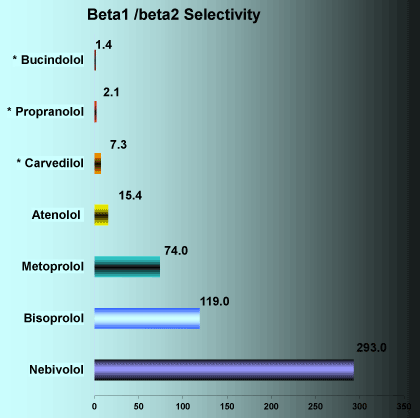
Nebivolol Does The Key Lie In B3 Agonism

Beta Blockers Mnemonics

How To Remember Beta Blocker Classification In 5 Minutes Youtube
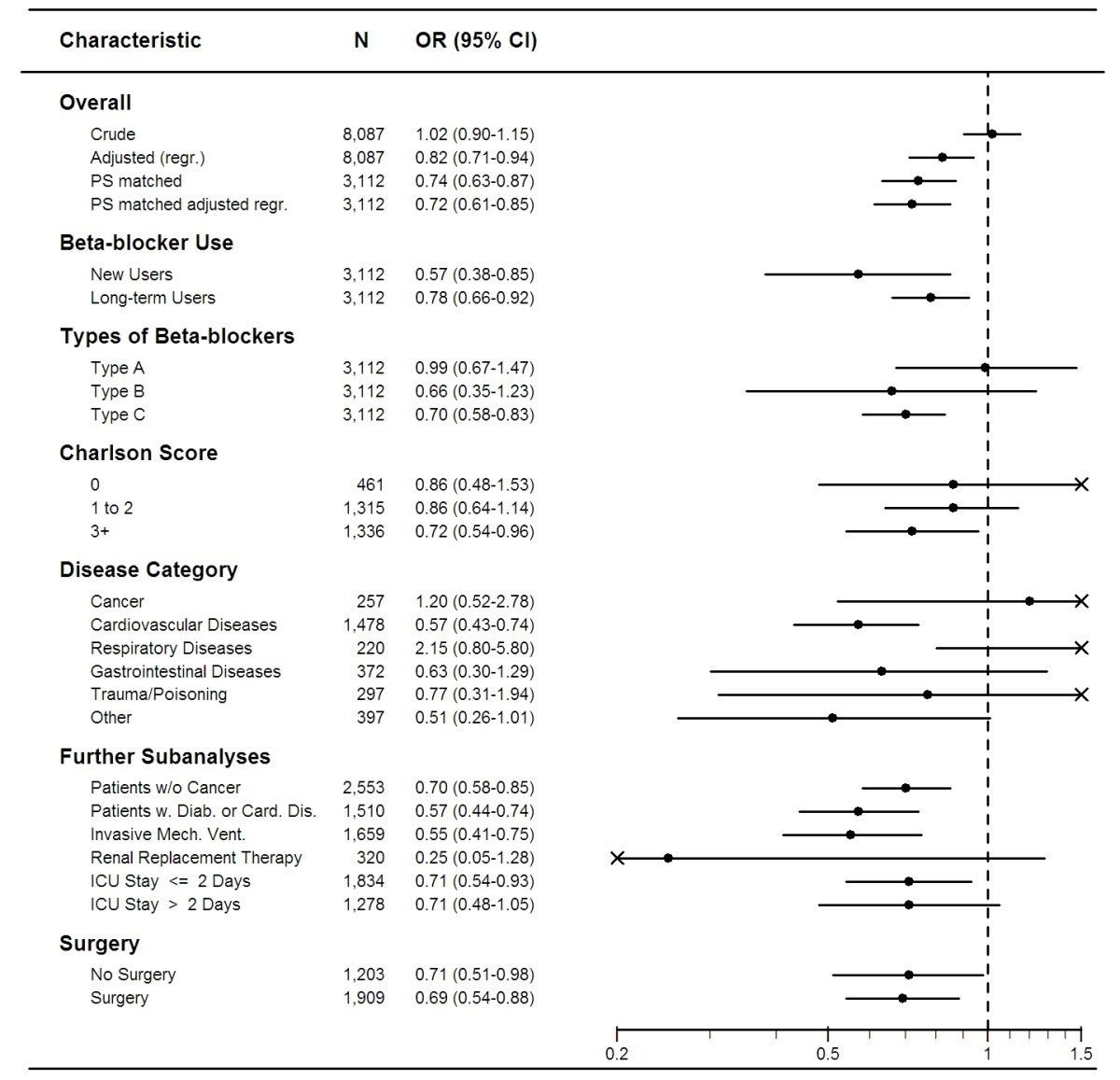
Preadmission Beta Blocker Use And 30 Day Mortality Among Patients In Intensive Care A Cohort Study Critical Care Full Text

Meta Analysis Of Carvedilol Versus Beta 1 Selective Beta Blockers Atenolol Bisoprolol Metoprolol And Nebivolol American Journal Of Cardiology

The Evolution Of B Blockers In Coronary Artery Disease And Heart Failure Part 1 5 Sciencedirect
Do B Blockers Cause Depression Hypertension

Beta Blockers Overview Beta Adrenergic Antagonists Cardioselective M Grepmed


