Heart Rate After Exercise
After adjustments were made for age. Heart rate recovery HRR is commonly defined as the decrease of heart rate at 1 minute after cessation of exercise and is an important predictor of allcause mortality and death associated with coronary artery diseaseHowever HRR at earlier time intervals after cessation has not been well evaluated and might better reflect PNS reactivation.
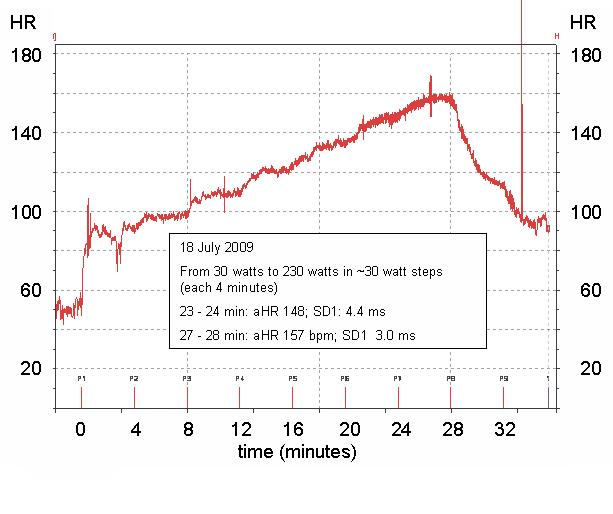
Heart Rate Variability Hrv During Exercise Canute S Efficient Running Site

Abnormal Heart Rate Recovery On Exercise In Ankylosing Spondylitis International Journal Of Cardiology
Respiratory Diseases Pass My Exams Easy Exam Revision Notes For Gsce Biology

This can be influenced by cooling down properly hydrating completely and following a diet that includes solid pre during and post-workout strategies.

Heart rate after exercise. Take your heart rate five minutes after the start of your exercise session and take it again before you go into your cool down. If youre sitting or lying and youre calm relaxed and arent ill your heart rate is normally between 60 beats per minute and 100 beats per minute. The heart rate two minutes after exercise is often referred to as the recovery heart rate.
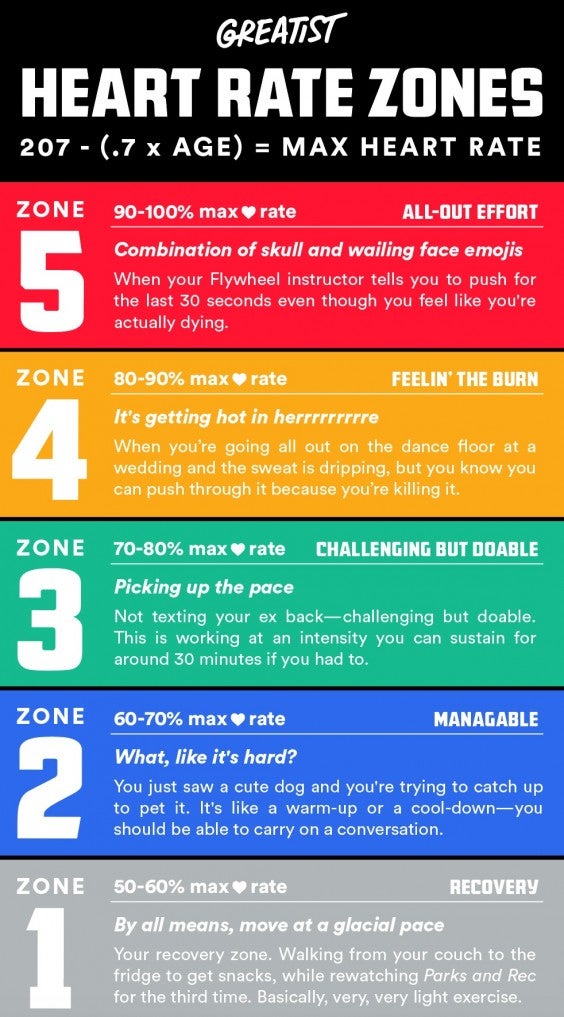
The American Heart Association AHA states that the maximum heart rate during exercise should be roughly equal to 220 bpm minus the age of the. To exercise at a vigorous pace aim for 70 to 85 percent of your maximum heart rate. If your heart rate reserve is 117 bpm using half of this reserve would mean increasing your heart rate by 117 x 05 585 bpm.
The heart rate of a typical individual will return to resting levels shortly after light or moderate exerciseThe heart rates of athletes--particularly endurance-trained and strength-trained athletes--will return to normal after exercise faster than nonathletes. Aerobic exercise is sometimes known as cardio -- exercise that requires pumping of oxygenated blood by the heart to deliver oxygen to working muscles. Heart rate recovery HRR is the reduction in heart rate at peak exercise and the rate as measured after a cool-down period of fixed duration.
According to health specialists 60-85 of maximum heart rate is considered normal after exercise. Possibly regular exercise andor physical activity cause a reduction in RHR 678 and RHR seems to be inversely related with life expectancy and positively related with cardiovascular and all-cause mortality. Learn more about what a normal heart rate is how to measure it how to lower a rapid heart rate and what things.
The adult resting heart rate ranges from 60 to 100 bpm. This is the most common measurement in determining cardiovascular fitness. The presence or absence of hypertension smoking chronic lung disease.
You can do this by taking your pulse using a heart rate monitor or using a fitness tracker or smart watch. After you stop your workout your heart rate gradually comes down. One possible mechanism explaining increases in life expectancy through exercise and physical activity might be the mediating effect of resting heart rate RHR.
So if you are age 30 your maximum heart rate is 190 beats per min and the normal exercise heart rate should be in between 114 and 162 beats per minute. For example a well-trained athlete might have a normal resting heart rate closer to 40 beats per minute. The max heart rate is the result you get with 220 beats per min subtracting your age.
Generally a lower heart rate at rest implies more efficient heart function and better cardiovascular fitness. Resting heart rates vary for everyone including athletes. A normal resting heart rate for adults ranges from 60 to 100 beats per minute.
There is an established link between smoking abnormal heart rate HR values and impaired cardiovascular health in middle-aged or older populations. If youre starting an exercise program you may want to set your target rate at 50 of maximum and gradually increase the intensity of your workout until you reach 70 to 80. This increase in heart rate is normal as your heart speeds up because of the added demands of exercise.
They recommend getting at least 30 minutes of moderate to vigorous exercise most days or a total of about 150 minutes a week. To test for improvements record the highest working heart rate during exercise then. Because its impossible to maintain a maximum heart rate for more than a few minutes physiologists have advised setting a percentage of your maximum heart rate as a target during exercise.
The purpose of this study was to examine the effects of smoking on resting HR and on HR responses during and after exercise in. An athletes heart rate can be lower than 60 bpm. The AHA recommends a person gets at least 30 minutes of moderate to vigorous exerciseexercise that elevates their heart rate to the target heart rate.
This range is your target heart rate zone. Some factors that could influence it include. A greater reduction in heart rate after exercise during the reference period is associated with a higher level of cardiac fitness.
In closing your bodys heart rate stays high after working out based upon how your body recovers. A normal resting heart rate is between 60 and 100 beats per minute but during a workout your heart rate may more than double. During exercise the rate can be 150 bpm with maximum rates reaching from 200.
Your heart rate or pulse is the number of times your heart beats in 1 minute. But a heart rate lower than 60 doesnt necessarily signal a medical. Instead you can aim to use a percentage of your reserve based on how strenuously you would like to exercise.
Your resting heart rate is the heart pumping the lowest amount of blood you need because youre not exercising. In contrast anaerobic without oxygen exercise is activity that causes you to be quickly out of breath. The resting heart rate of a newborn can be 129 beats per minute bpm and this gradually decreases until maturity.
The American Heart Association recommends that you do exercise that increases your heart rate to between 50 and 85 of your maximum heart rate. Target heart rate during moderate intensity activities is about 50-70 of maximum heart rate while during vigorous physical activity its about 70-85 of maximum. Aerobic exercise stimulates the heart rate and breathing rate to increase in a way that can be sustained for the exercise session.
How to calculate your ideal fat-burning heart rate Figuring out your target heart rate is easy and takes just a. However an athletes heart rate may go up to 180 bpm to 200 bpm during exercise. Multiply your heart rate reserve by 05 to find the minimum increase needed for moderate exercise.
Aerobic exercise heart rate is recommended to reach 85 of the maximum heart rate for 20 to 30 minutes. Monitor Your Heart Rate During Exercise. Heart-rate increase during exercise.

Impact Of Exercise On Heart Rate Recovery Circulation

Student Genderresting Pulse Pulse After Exercise 1m M F F F7688 6m6080 7m6585 Br Average Heart Rate Data What Is The Average Ppt Download

How Physically Fit Are You Discovery Express
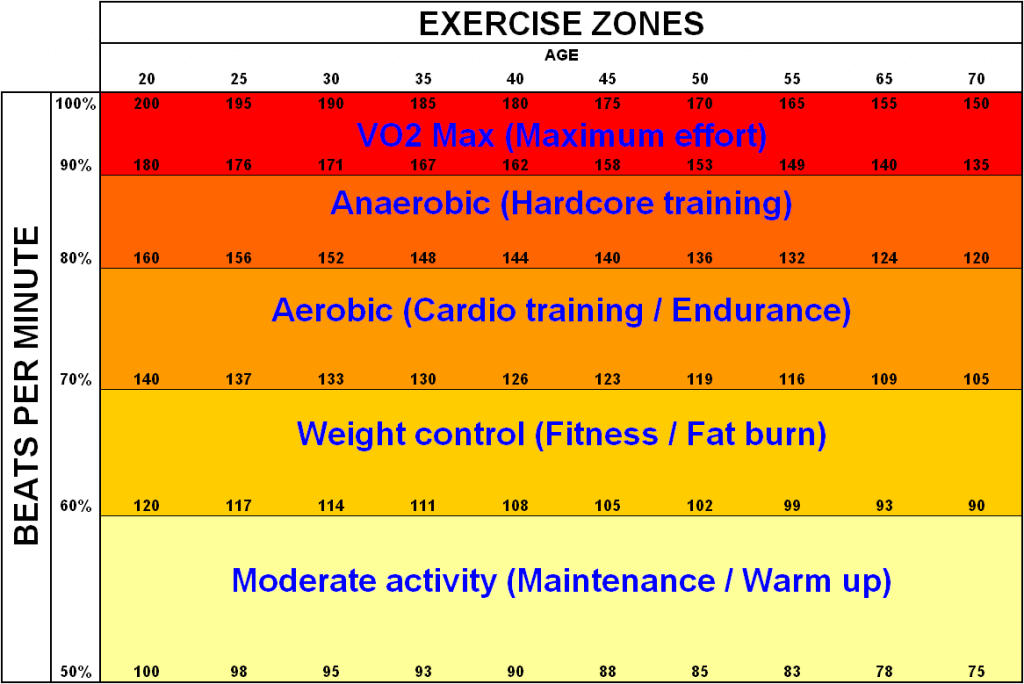
How To Boost Swimming Performance Through Real Time Heart Rate Monitoring Swimming World News
Heart Rate Recovery Powerful Prognosticator Now On Apple Watch Medpage Today
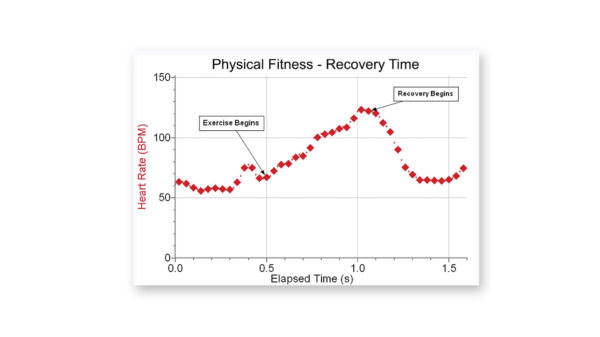
Exercise Heart Rate Monitor Vernier
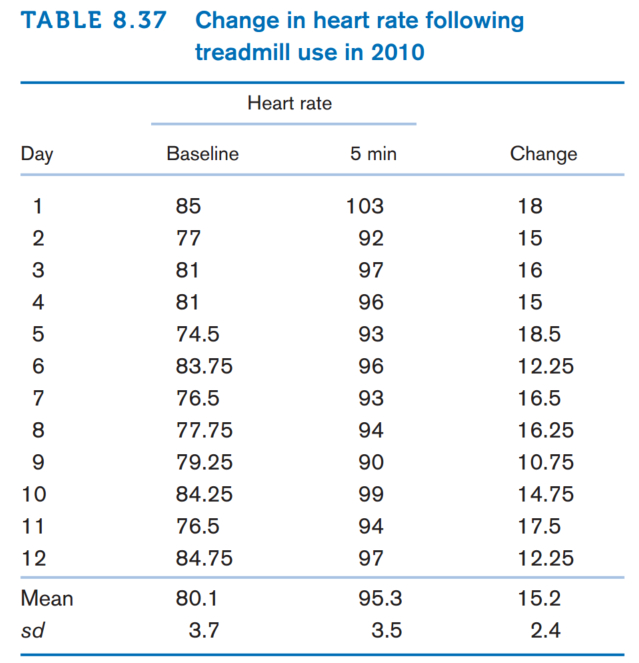
Health Promotion An Individual Has Been Exercising At Chegg Com
Heart Rate Zones How Knowing Your Heart Rate Can Improve Your Workout